Golden Pothos
Epipremnum aureum · Araceae
How it looks
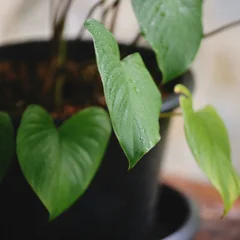
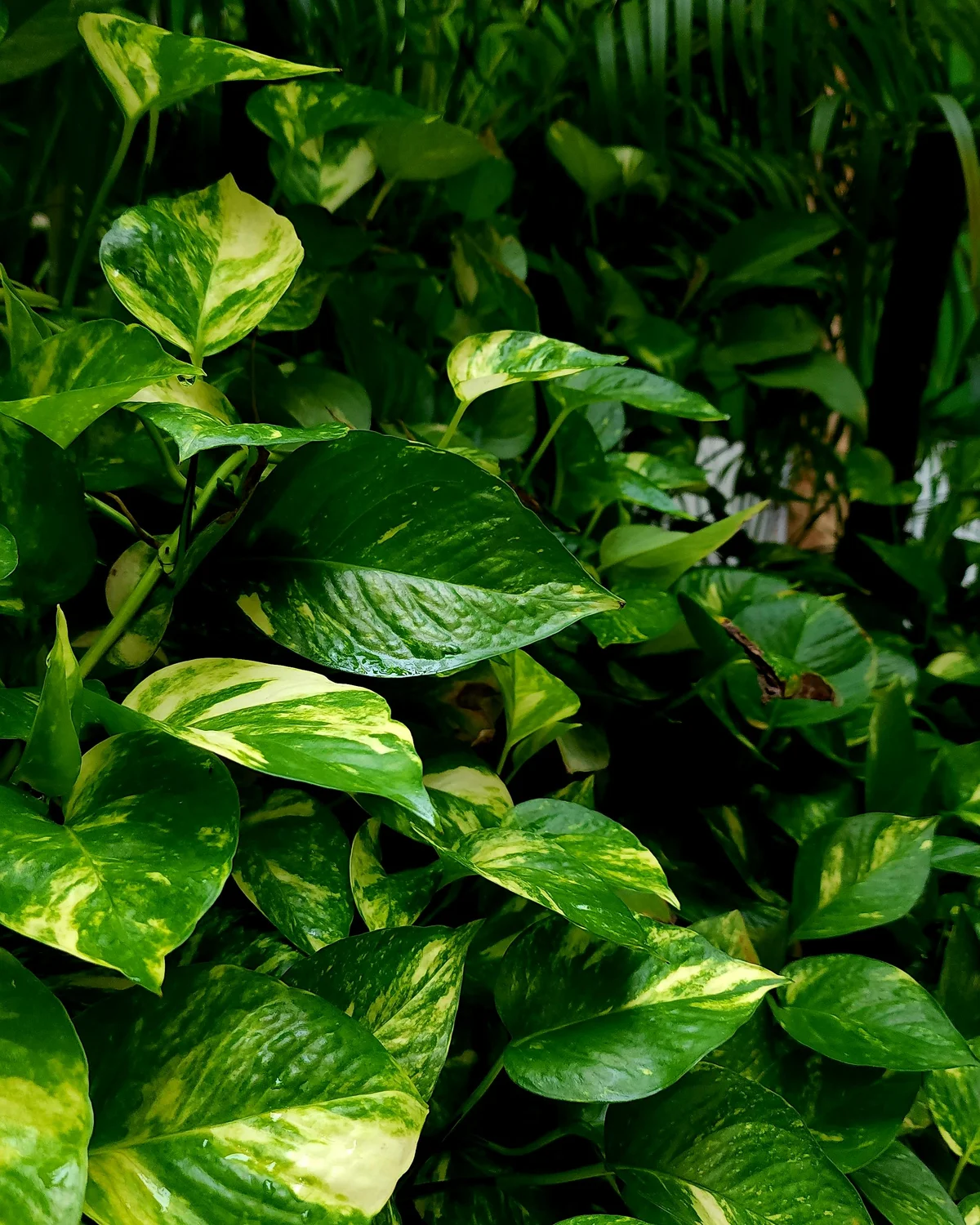
Golden pothos is a vining plant with glossy, heart-shaped leaves marked with yellow, light-green, or white variegation. The stems trail long and root at each node, so it's grown in hanging pots or trained up a pole. Leaves are 2–6 in (5–15 cm) long, and it's one of the most common houseplants.
Caution — mouth irritation and mild stomach upset
The leaves and stems contain calcium oxalate crystals. Chewing causes the mouth and tongue to swell and triggers drooling. It's rarely life-threatening, but the unpleasant symptoms can last several hours.
Guide for parents
Golden pothos is one of the most common houseplants in homes and offices. Its long trailing vines often end up right where a cat can chew on them. Keep it out of reach on a high shelf or in a hanging planter, or place cat grass or catnip nearby to redirect your cat's interest. Make a habit of picking up fallen leaves right away.
If ingested
Contact your nearest vet immediately
- Onset
- Within minutes of chewing
- Symptoms
- Oral irritation, vomiting, difficulty swallowing
- Action
- Rinse the mouth with water and call your vet if symptoms are severe. Seek care immediately if breathing is affected.
Details
- Scientific name
- Epipremnum aureum
- Common name
- Golden Pothos
- Family
- Araceae
- Toxic parts
- All parts
- Compounds
- Insoluble calcium oxalate crystals
- Onset
- Within minutes of chewing
- Symptoms
- Oral irritation, vomiting, difficulty swallowing
- Action
- Rinse the mouth with water and call your vet if symptoms are severe. Seek care immediately if breathing is affected.
- Source
- ASPCA