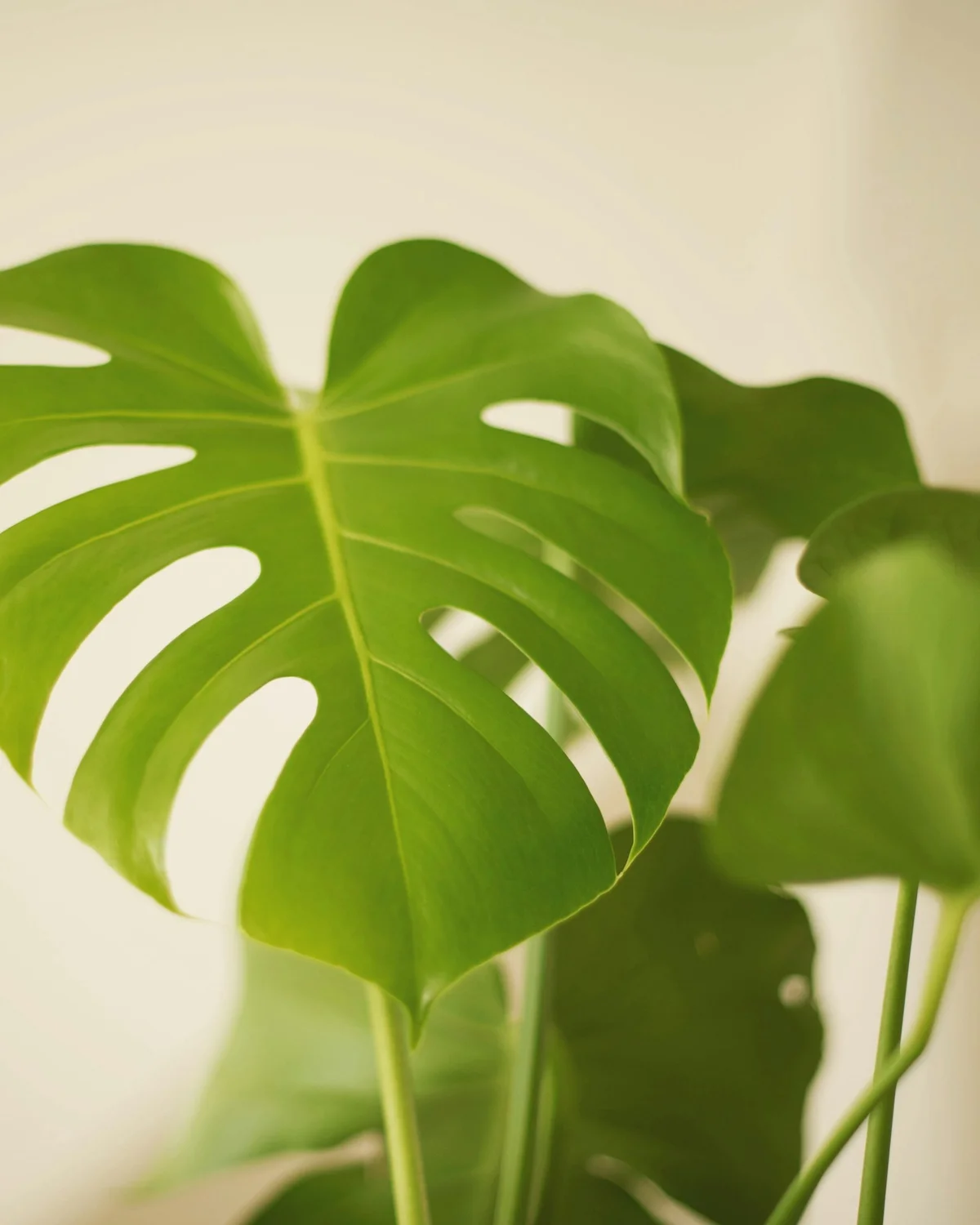
Monstera
Monstera deliciosa · Araceae
How it looks
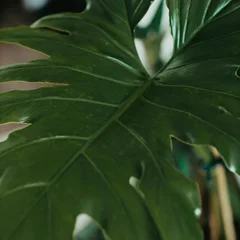
Monstera is a houseplant with large, glossy, deep-green leaves that develop natural splits and holes. The splits grow deeper and larger as the leaves mature, with leaves reaching 12–31 in (30–80 cm). Long aerial roots hang down from the thick stems.
Caution — leaf sap irritates the mouth
The sap in the leaves and stems contains calcium oxalate crystals. Chewing causes stinging of the mouth and tongue, drooling, and vomiting. Most cats spit it out after a bite or two, and symptoms ease on their own.
Guide for parents
Monstera's large, eye-catching leaves tend to draw a cat's attention. The way the big leaves sway can trigger their hunting instinct. Place the pot on a high shelf, or tie the leaves up so they don't trail within reach. New leaves (the young ones still curled at the center) are the softest and most irritating, so keep them especially out of paws' reach.
If ingested
Contact your nearest vet immediately
- Onset
- Within minutes of chewing
- Symptoms
- Oral irritation, vomiting, difficulty swallowing
- Action
- Rinse the mouth with water. See a vet if symptoms last more than 6 hours or breathing is affected.
Details
- Scientific name
- Monstera deliciosa
- Common name
- Monstera
- Family
- Araceae
- Toxic parts
- All parts
- Compounds
- Insoluble calcium oxalate crystals
- Onset
- Within minutes of chewing
- Symptoms
- Oral irritation, vomiting, difficulty swallowing
- Action
- Rinse the mouth with water. See a vet if symptoms last more than 6 hours or breathing is affected.
- Source
- ASPCA