Christmas Rose
Helleborus niger · Ranunculaceae
How it looks
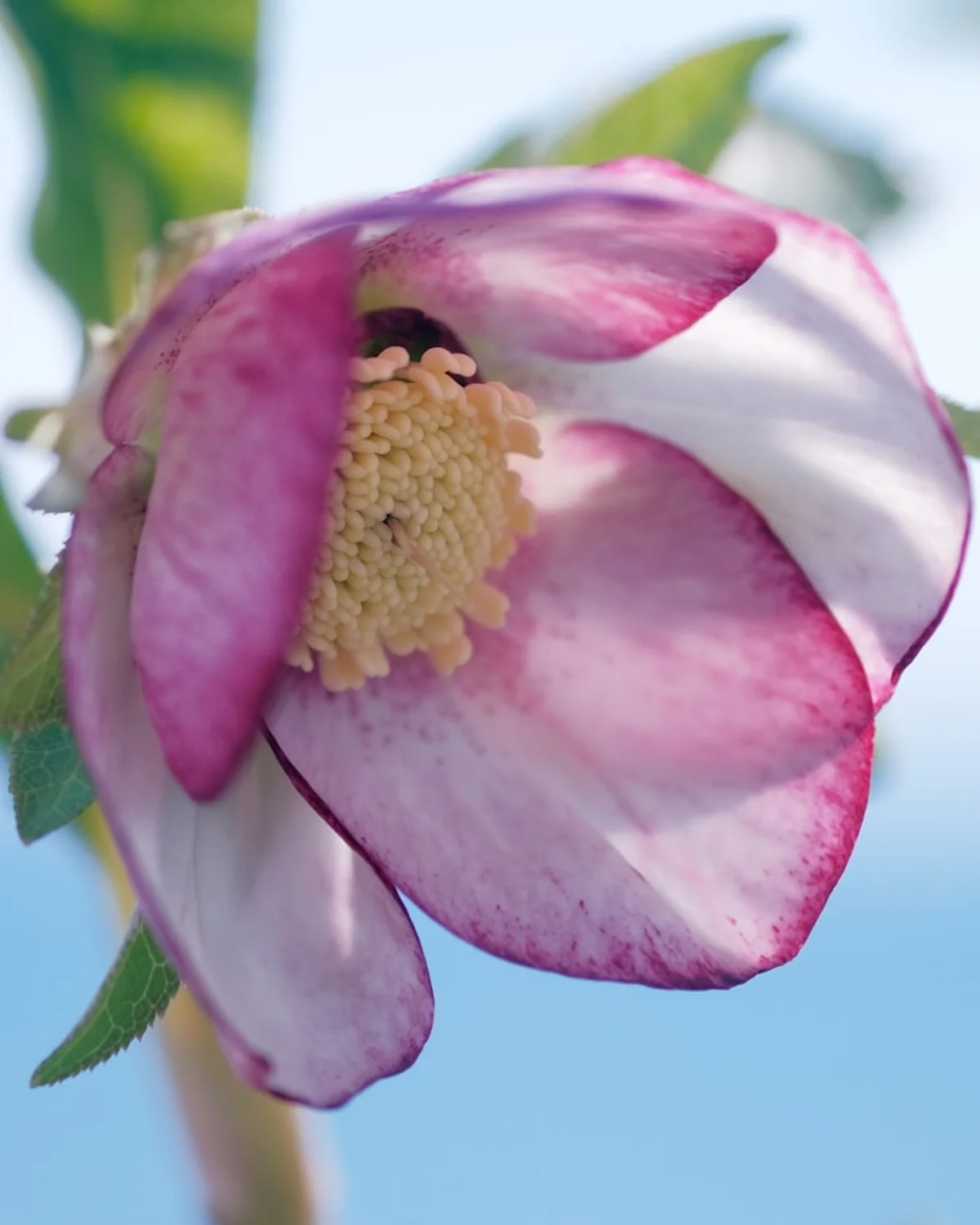
Christmas Rose bears flowers with five white to pink petals opening in a cup shape around a cluster of yellow anthers at the center, blooming in winter to early spring. The leaves are palm-shaped, deeply divided, deep-green and leathery, and it reaches about 8-16 in (20-40 cm) tall.
Caution — monitor for GI symptoms
All parts of Christmas Rose contain irritating compounds that can cause vomiting and diarrhea if chewed. Most cats recover on their own, but as a caution-level plant it still calls for monitoring.
Guide for parents
An occasional nibble of Christmas Rose usually doesn't lead to anything serious, but the cardiac glycosides and protoanemonin in it can irritate the stomach and mucous membranes and cause mild gastrointestinal symptoms. Make a habit of clearing away fallen leaves or broken stems the same day, and keep the pot somewhere your cat can't reach. If symptoms last more than 12 hours or your cat's appetite clearly drops, consult your vet.
If ingested
Contact your nearest vet immediately
- Onset
- 1–4 hours after ingestion
- Symptoms
- Vomiting, colic, diarrhea, nervous system depression
- Action
- Consult a vet and monitor. Go in immediately if symptoms worsen.
Details
- Scientific name
- Helleborus niger
- Common name
- Christmas Rose
- Family
- Ranunculaceae
- Toxic parts
- All parts
- Compounds
- Cardiac glycosides, Protoanemonin
- Onset
- 1–4 hours after ingestion
- Symptoms
- Vomiting, colic, diarrhea, nervous system depression
- Action
- Consult a vet and monitor. Go in immediately if symptoms worsen.
- Source
- ASPCA