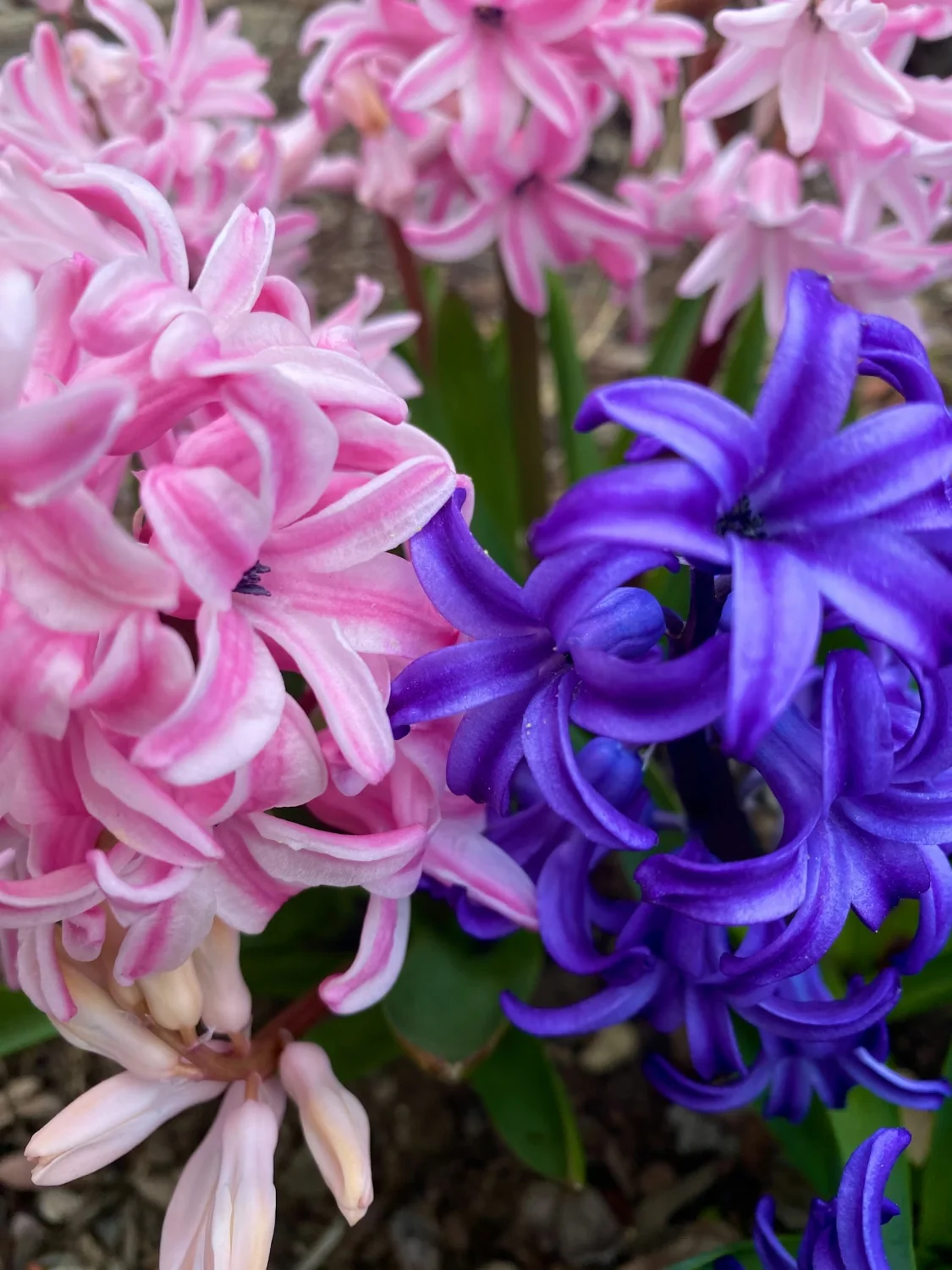
Hyacinth
Hyacinthus orientalis · Asparagaceae
How it looks
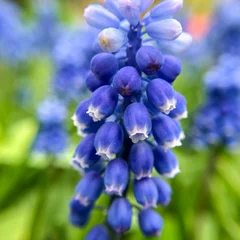
Hyacinth is a bulb plant whose thick flower stalk carries small bell-shaped flowers densely packed into a spike. Purple, pink, white, and yellow are common, and the scent is very strong. The leaves are narrow and glossy dark green. It stands 8–12 in (20–30 cm) tall and blooms in spring.
Caution — the bulbs are the most toxic part
Like daffodils, Hyacinth concentrates alkaloids and oxalic acid in its bulb. Eating the bulb can cause intense vomiting, diarrhea, depression, and tremors.
Guide for parents
Hyacinth is a signature spring-fragrance potted plant. The bulb planted in the pot is the most dangerous part, so don't keep it in a shared living space. Flowers and leaves that come as cut flowers are relatively low-risk, but it's best to clear fallen petals the same day. If you suspect your cat ate a bulb, head to the vet right away. If trembling or unsteadiness starts, don't hesitate any longer.
If ingested
Contact your nearest vet immediately
- Onset
- 1–4 hours after ingestion
- Symptoms
- Intense vomiting, diarrhea, depression, tremors
- Action
- Consult a vet and monitor. Go in immediately if symptoms worsen.
Details
- Scientific name
- Hyacinthus orientalis
- Common name
- Hyacinth
- Family
- Asparagaceae
- Toxic parts
- All parts (especially the bulbs)
- Compounds
- Alkaloids, Oxalic acid
- Onset
- 1–4 hours after ingestion
- Symptoms
- Intense vomiting, diarrhea, depression, tremors
- Action
- Consult a vet and monitor. Go in immediately if symptoms worsen.
- Source
- ASPCA