Privet
Ligustrum japonicum · Oleaceae
How it looks
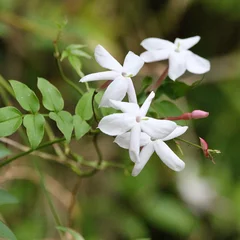
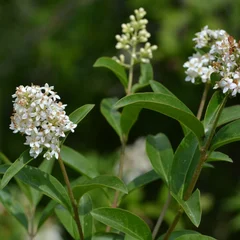
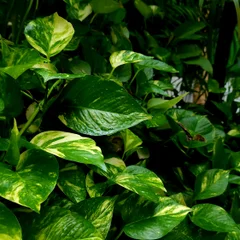
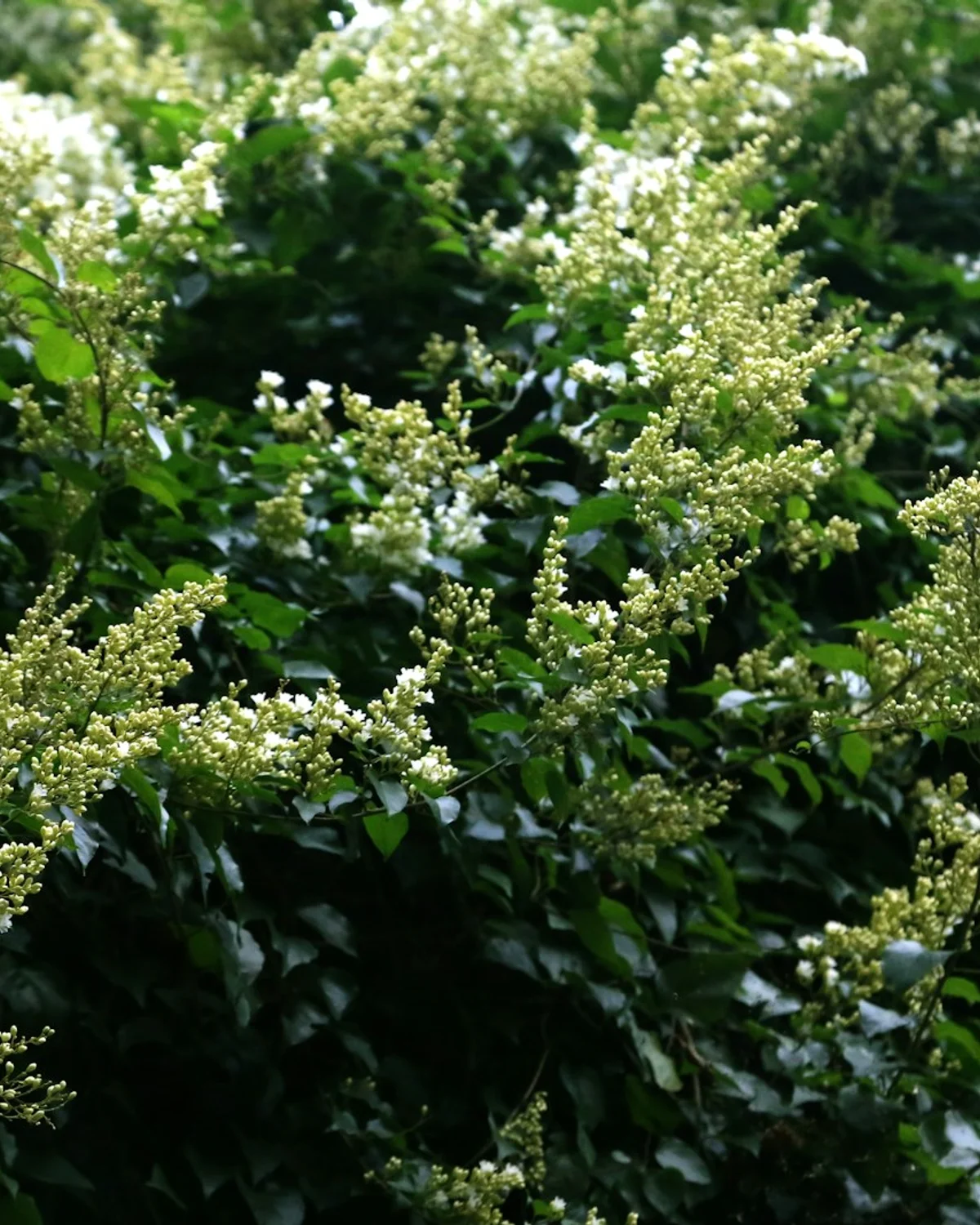
Japanese Privet is an evergreen to semi-evergreen shrub with small, glossy oval leaves arranged in opposite pairs. In early summer small white flowers bloom in clusters at the branch tips and are strongly fragrant. In autumn and winter round black fruits appear in clusters. It stands 7–13 ft (2–4 m) tall and is common in hedges.
Caution — monitor for GI symptoms
All parts of Privet (especially the fruit) contain irritating compounds that can cause vomiting and diarrhea if chewed. Most cats recover on their own, but as a caution-level plant it still calls for monitoring.
Guide for parents
An occasional nibble of Privet usually doesn't lead to anything serious, but the ligustrin in it can irritate the stomach and mucous membranes and cause mild gastrointestinal symptoms. Make a habit of clearing away fallen leaves or broken stems the same day, and keep the pot somewhere your cat can't reach. If symptoms last more than 12 hours or your cat's appetite clearly drops, consult your vet.
If ingested
Contact your nearest vet immediately
- Onset
- 1–4 hours after ingestion
- Symptoms
- Vomiting, diarrhea
- Action
- Consult a vet and monitor. Go in immediately if symptoms worsen.
Details
- Scientific name
- Ligustrum japonicum
- Common name
- Privet
- Family
- Oleaceae
- Toxic parts
- All parts (especially the fruit)
- Compounds
- Ligustrin
- Onset
- 1–4 hours after ingestion
- Symptoms
- Vomiting, diarrhea
- Action
- Consult a vet and monitor. Go in immediately if symptoms worsen.
- Source
- ASPCA