Easter Lily
Lilium longiflorum · Liliaceae
How it looks
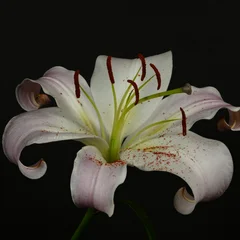
Easter Lily is a lily cultivar whose large pure-white trumpet flowers face sideways or slightly downward. The six petals curl back slightly and the flower is strongly fragrant; the leaves are dark green, narrow, and long, wrapping around the stem. It usually blooms in March and April.
Deadly — kidney failure from a small amount
This is among the most dangerous of all true lilies (Lilium). Every part — petals, leaves, pollen, even the vase water — is deadly, and a cat can die of acute kidney failure within 24–72 hours of ingestion.
Guide for parents
Easter Lily often arrives in spring as a bouquet or potted gift. Do not bring even a single stem into your home. A cat can be poisoned just by grooming after brushing against the plant, and even licking pollen off its fur is dangerous. By the time symptoms appear, kidney damage is already underway. If you suspect any lily ingestion, go to the hospital immediately even without symptoms. Time is survival.
If ingested
Contact your nearest vet immediately
- Onset
- 6–24 hours after ingestion (symptoms may be delayed)
- Symptoms
- Vomiting, inappetence, kidney failure, death
- Action
- Go to a 24-hour animal hospital immediately. Don't wait, even if there are no symptoms.
Details
- Scientific name
- Lilium longiflorum
- Common name
- Easter Lily
- Family
- Liliaceae
- Toxic parts
- All parts (including pollen)
- Compounds
- Unknown (presumed steroidal saponins)
- Source
- ASPCA