Garlic
Allium sativum · Amaryllidaceae
How it looks
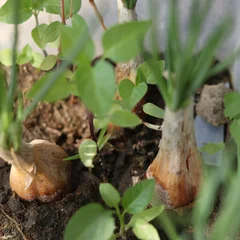
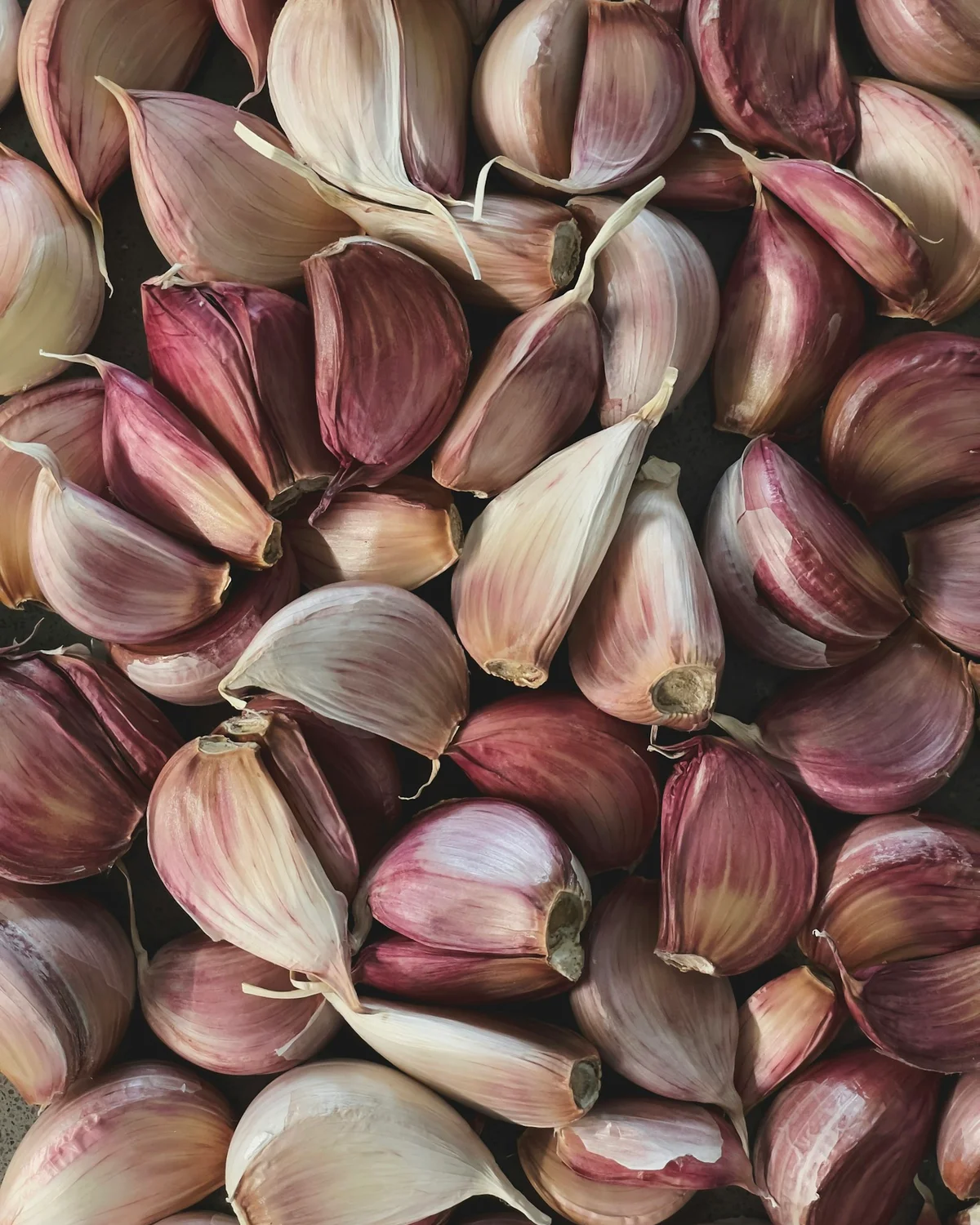
Garlic forms a round bulb (a whole head) made up of clustered scaly cloves, wrapped in a white papery skin. The leaves are flat, long, and sword-shaped in deep green, releasing a strong garlic odor when cut. The flower stalk rises straight to 28–39 in (70–100 cm), topped by small pink-to-white flowers bunched into a ball.
Dangerous — red blood cell destruction
Garlic is even more dangerous than onions. Allicin and thiosulfates destroy red blood cells and cause anemia, and even small repeated ingestions build up to real danger.
Guide for parents
A common kitchen ingredient, but a potent toxin for cats. It works by the same mechanism as onion, only more concentrated. Minced Garlic, roasted Garlic, Garlic juice, and Garlic powder are all dangerous, and sharing a bite of human food is the most common exposure. If you suspect ingestion, go to an animal hospital immediately. Signs of anemia (pale gums, lethargy) can take days to appear, so knowing the exposure happened is itself a key diagnostic clue.
If ingested
Contact your nearest vet immediately
- Onset
- 2–6 hours after ingestion
- Symptoms
- Vomiting, breakdown of red blood cells, anemia
- Action
- Go to an animal hospital immediately. Don't wait, even if symptoms seem mild.
Details
- Scientific name
- Allium sativum
- Common name
- Garlic
- Family
- Amaryllidaceae
- Toxic parts
- All parts
- Compounds
- N-propyl disulfide, Thiosulfates, Allicin
- Source
- ASPCA