Lily
Lilium species · Liliaceae
How it looks
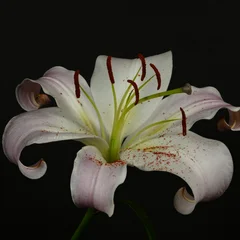
Lilies are strongly fragrant flowers with six large petals that open into a trumpet shape. Colors range from white to pink to yellow, often with dark speckles inside the petals and long, protruding yellow anthers (the pollen). The leaves are narrow and sword-shaped, arranged around the stem.
Deadly — kidney failure from tiny amounts
True lilies are among the most dangerous plants for cats. Eating a single petal — or even a grain of pollen — can cause acute kidney failure within 24 hours.
Guide for parents
Never bring lilies into a home with cats. Even one stem mixed into a bouquet can be fatal. Every part is dangerous — leaves, flowers, pollen, and even the water in the vase. A cat that brushes against the plant and then grooms itself can be poisoned. By the time symptoms appear, kidney damage is already underway. If you suspect any exposure, go to a vet immediately — even if your cat seems fine.
If ingested
Contact your nearest vet immediately
- Onset
- 6–12 hours after ingestion (vomiting comes first)
- Symptoms
- Vomiting, inappetence, kidney failure, death
- Action
- Go to a 24-hour animal hospital immediately. Every hour counts.
Details
- Scientific name
- Lilium species
- Common name
- Lily
- Family
- Liliaceae
- Toxic parts
- All parts (including pollen)
- Compounds
- Unknown (possibly steroidal saponins)
- Source
- ASPCA