Glory Lily
Gloriosa superba · Colchicaceae
How it looks
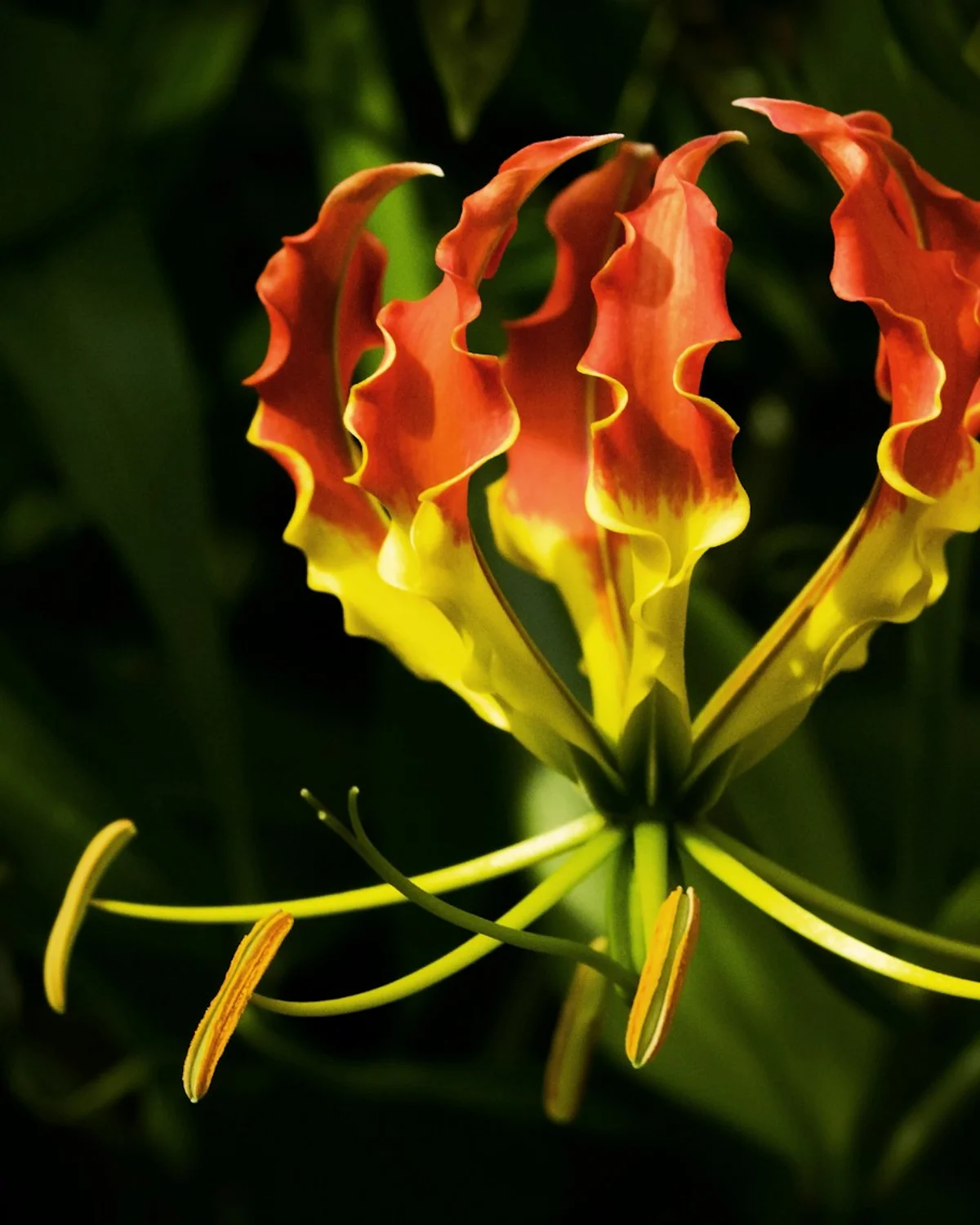
Glory Lily is a vining member of the lily family whose petals curve sharply backward, giving the flower a flame-like look. The blooms are a vivid mix of red and yellow, and the leaf tips taper into slender tendrils that coil around supports. It reaches 3–7 ft (1–2 m) and is sold as a tropical ornamental.
Deadly — multiple organ failure
All parts of Glory Lily, especially the bulb, contain colchicine; even a small amount can cause vomiting and mucoid drooling, progressing to multi-organ failure and death.
Guide for parents
Glory Lily is popular as a garden and container plant for its showy blooms. Its colchicine toxicity is every bit as deadly as a true lily's, so don't bring it into your home. Repotting time, when the bulbs are exposed, is especially dangerous. The soil, roots, and petals are all hazardous. If you suspect ingestion, go to a 24-hour animal hospital immediately even if symptoms seem mild. With colchicine poisoning, multi-organ damage typically only becomes apparent 24–48 hours after the initial symptoms.
If ingested
Contact your nearest vet immediately
- Onset
- 6–24 hours after ingestion (symptoms may be delayed)
- Symptoms
- Vomiting, salivation, pain, multi-organ failure
- Action
- Go to a 24-hour animal hospital immediately. Don't wait, even if there are no symptoms.
Details
- Scientific name
- Gloriosa superba
- Common name
- Glory Lily
- Family
- Colchicaceae
- Toxic parts
- All parts (especially the bulbs)
- Compounds
- Colchicine, Gloriosine
- Source
- ASPCA