Poinsettia
Euphorbia pulcherrima · Euphorbiaceae
How it looks
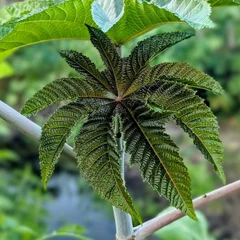
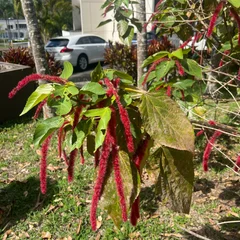
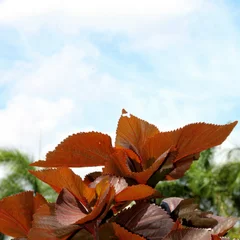
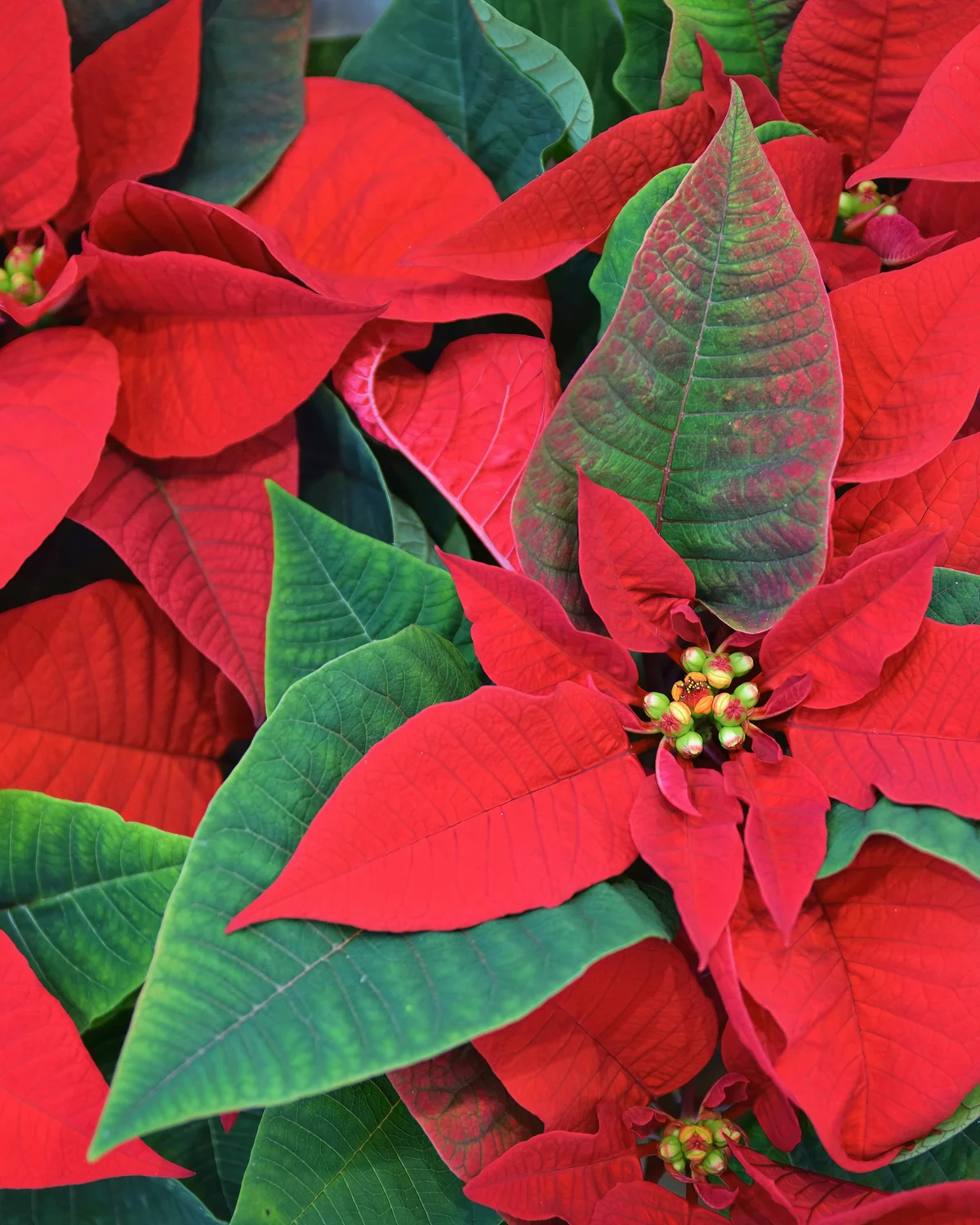
Poinsettia is a plant in which large red, pink, or white leaves gather like a flower above the deep-green foliage. The colored portions are actually not flowers but modified leaves (bracts), and the true flowers are small and clustered yellow at the center. Cutting the stem releases a white latex sap, and it reaches about 12 in to 3 ft (30 cm-1 m) tall.
Caution — mouth and stomach irritation
Despite its reputation, this plant is not deadly. The milky sap contains irritating diterpenoid esters, but most cases end with mouth and stomach irritation and mild vomiting.
Guide for parents
Poinsettia is a Christmas-season potted regular, so it comes into the home every December. When the leaves break, a white latex seeps out, and if it touches the mouth it causes drooling and mild nausea. Rinse the mouth with water, and if vomiting continues for more than 6 hours or breathing becomes labored, consult your vet. A shelf out of your cat's reach is the safe spot for it.
If ingested
Contact your nearest vet immediately
- Onset
- Right away to within 2 hours of ingestion
- Symptoms
- Irritating to mouth and stomach, mild vomiting
- Action
- Rinse the mouth with water and monitor. Consult a vet if symptoms last more than 12 hours.
Details
- Scientific name
- Euphorbia pulcherrima
- Common name
- Poinsettia
- Family
- Euphorbiaceae
- Toxic parts
- All parts (especially the latex)
- Compounds
- Diterpenoid esters, Saponin-like compounds
- Onset
- Right away to within 2 hours of ingestion
- Symptoms
- Irritating to mouth and stomach, mild vomiting
- Action
- Rinse the mouth with water and monitor. Consult a vet if symptoms last more than 12 hours.
- Source
- ASPCA