Kaffir Lily
Clivia miniata · Amaryllidaceae
How it looks
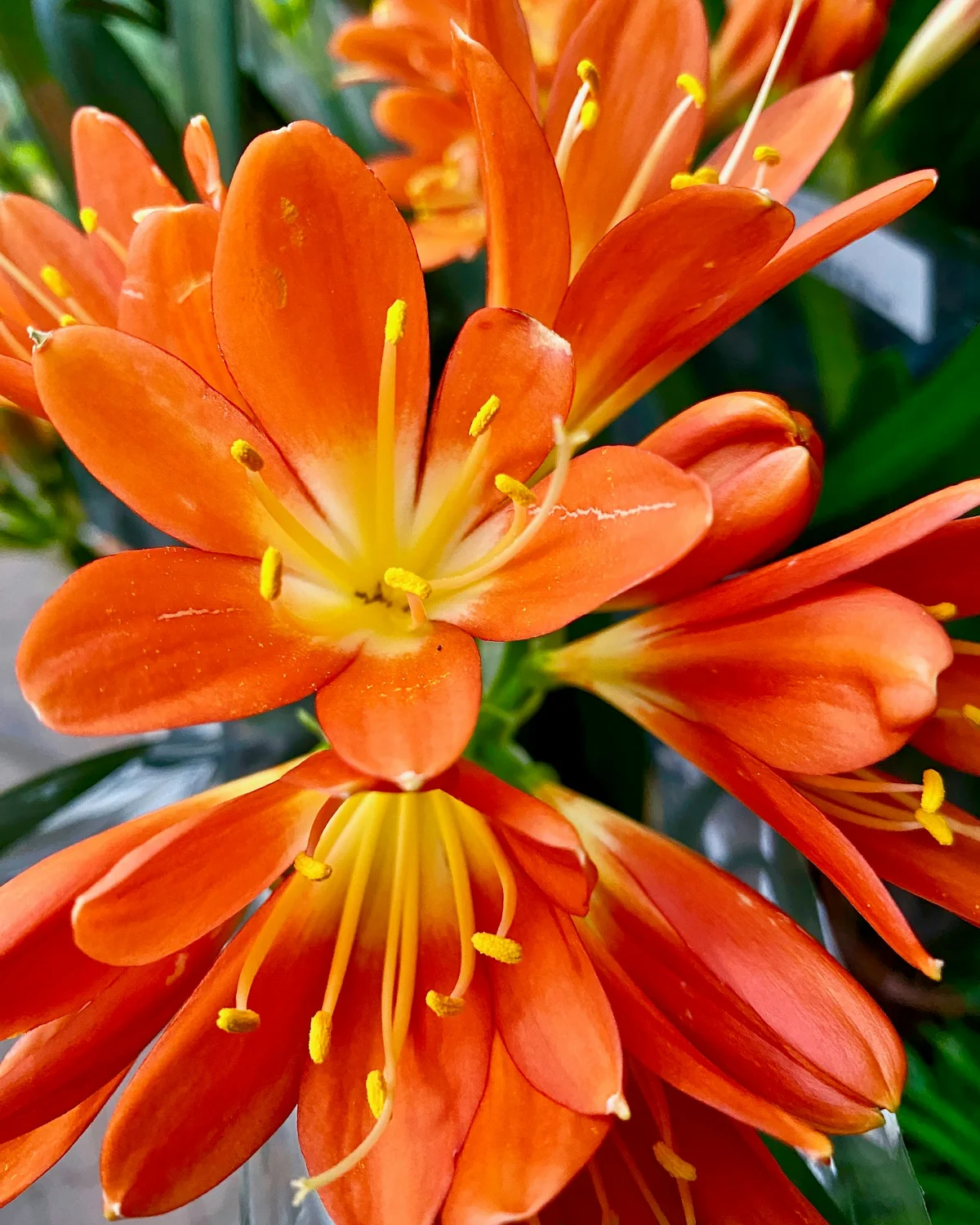
Kaffir Lily has broad, thick, long strap-shaped dark green leaves that grow from the base in a fan-shaped clump. In spring, 10–20 orange-to-red trumpet-shaped flowers gather like an umbrella at the tip of a thick flower stalk. It grows 16–24 in (40–60 cm) tall.
Caution — monitor for GI symptoms
All parts of Kaffir Lily (especially the bulb) contain irritating compounds that can cause vomiting, diarrhea, and depression if chewed. Most cats recover on their own, but as a caution-level plant it still calls for monitoring.
Guide for parents
An occasional nibble on Kaffir Lily rarely leads to serious trouble, but its lycorine and other alkaloids can irritate the stomach and mucous membranes, causing mild gastrointestinal upset. Make a habit of clearing away fallen leaves and broken stems the same day, and keep the pot somewhere your cat can't reach. If symptoms last more than 12 hours or your cat shows a marked loss of appetite, consult your vet.
If ingested
Contact your nearest vet immediately
- Onset
- 1–4 hours after ingestion
- Symptoms
- Vomiting, diarrhea, depression
- Action
- Consult a vet and monitor. Go in immediately if symptoms worsen.
Details
- Scientific name
- Clivia miniata
- Common name
- Kaffir Lily
- Family
- Amaryllidaceae
- Toxic parts
- All parts (especially the bulbs)
- Compounds
- Lycorine, Alkaloids
- Onset
- 1–4 hours after ingestion
- Symptoms
- Vomiting, diarrhea, depression
- Action
- Consult a vet and monitor. Go in immediately if symptoms worsen.
- Source
- ASPCA